

Balancing precision and artistry at the bar is what separates a good gin service from a remarkable one. For gin enthusiasts and bartenders inspired by Mediterranean heritage, every step matters from sparkling clean glassware to aromatic garnishes. Discover how mastering these details brings out complex botanicals in artisan gin like Gin Niro, creating a sensory experience that carries the essence of the Mediterranean coast into every glass. Choosing appropriate glassware and thoughtful preparation turn each pour into a Mediterranean journey.
Table of Contents
- Step 1: Prepare High-Quality Glassware And Tools
- Step 2: Select Ideal Garnishes For Mediterranean Character
- Step 3: Measure And Pour Artisan Gin Precisely
- Step 4: Add Premium Mixers For Balance
- Step 5: Garnish And Present For Maximum Sensory Impact
- Step 6: Verify Flavor And Presentation Consistency
Quick Summary
| Key Insight | Explanation |
|---|---|
| 1. Use Appropriate Glassware | Selecting the right glassware enhances the sensory profile of Mediterranean-style gin and elevates the drinking experience. |
| 2. Choose Complementary Garnishes | Ideal garnishes like fresh herbs and citrus peels amplify gin's flavors and connect to the Mediterranean character. |
| 3. Measure Gin Precisely | Accurate pouring with tools like jiggers ensures cocktails showcase the gin's complexities and maintain flavor integrity. |
| 4. Utilize High-Quality Mixers | Premium mixers should match the gin's botanical notes to create a balanced, sophisticated cocktail experience. |
| 5. Maintain Consistency in Presentation | Quality control checks for visual clarity and flavor ensure that every cocktail remains exceptional from first sip to last. |
Step 1: Prepare High-Quality Glassware and Tools
Crafting the perfect artisan gin experience begins with selecting and preparing the right glassware and bartending tools. Proper preparation ensures that every nuanced flavor of Mediterranean-style gin is highlighted and appreciated by discerning enthusiasts.
When preparing to serve gin, you'll want to focus on three critical aspects: glassware selection, cleaning technique, and tool readiness. Choosing appropriate glassware can dramatically enhance your gin's sensory profile.
Essential tools and glassware for gin service include:
- Martini glasses for classic gin cocktails
- Rocks glasses for neat gin or short mixed drinks
- Highball glasses for gin and tonic style beverages
- Bar spoon for precise mixing
- Cocktail shaker for chilled preparations
- Jigger for accurate spirit measurements
Cleaning your glassware requires meticulous attention. Rinse glasses with hot water, avoiding soap residues that can interfere with gin's delicate aromatics. Dry thoroughly using lint-free cloths to prevent water spots or contamination.
Clean, crystal-clear glassware is the canvas upon which your gin's story is told.
Pro tip: Chill your glasses in the freezer for 10-15 minutes before serving to maintain optimal gin temperature and enhance the drinking experience.
Step 2: Select Ideal Garnishes for Mediterranean Character
Elevating your artisan gin experience requires selecting garnishes that perfectly complement the spirit's Mediterranean character. Understanding how to choose the right herbs, citrus, and aromatics can transform an ordinary cocktail into an extraordinary sensory journey.
Traditional Mediterranean gin garnishes draw inspiration from the region's vibrant culinary landscape. Gin garnish techniques focus on enhancing botanical profiles through carefully selected complementary ingredients.
Classic Mediterranean-inspired garnish options include:
- Fresh rosemary sprigs for herbal complexity
- Lemon or orange peels to highlight citrus notes
- Green olives for a briny Mediterranean touch
- Fresh basil leaves to add aromatic brightness
- Thyme sprigs for earthy undertones
When selecting garnishes, consider how each element interacts with your gin's specific botanical blend. Match the garnish to the gin's flavor profile by examining its predominant notes and selecting complementary aromatics.
Here's a quick reference for matching your gin's flavor profile to ideal Mediterranean-style garnishes:
| Gin Botanical Profile | Best Garnish Pairing | Sensory Effect |
|---|---|---|
| Citrusy | Lemon/orange peel | Enhances zesty notes |
| Herbal | Rosemary/thyme | Boosts herbal aromatics |
| Briny | Green olive | Adds savory complexity |
| Floral | Edible flowers | Delivers delicate aroma |
A well-chosen garnish is more than decoration - it's a flavor bridge connecting your gin to the Mediterranean landscape.
Additional garnish preparation techniques can further enhance your presentation. Gently bruise herbs like rosemary or thyme to release their essential oils, creating a more intense aromatic experience. Twist citrus peels to express their oils across the drink's surface, adding depth and complexity.

Pro tip: Always keep your garnishes fresh and crisp, storing herbs in slightly damp paper towels in the refrigerator to maintain their vibrant flavors and appearance.
Step 3: Measure and Pour Artisan Gin Precisely
Crafting the perfect Mediterranean gin cocktail demands precision in every pour. Your goal is to transform a simple drink into an extraordinary sensory experience by mastering the art of exact gin measurement.
Precise gin measurement techniques are fundamental to maintaining the integrity of your artisan spirit, ensuring each cocktail reflects the intended flavor profile. Professional bartenders understand that consistency is key in delivering an exceptional drinking experience.
Essential tools for precise gin pouring include:
- Stainless steel jigger with clear measurement markings
- Digital scale for weight-based measurements
- Graduated measuring cups for larger volume preparations
- Pouring spouts to control liquid flow
- Calibrated shot glasses for accuracy
When pouring your artisan gin, focus on these critical techniques:
- Always use a measuring tool
- Hold the jigger at eye level for precise reading
- Pour slowly to prevent overflow
- Level the liquid at the measurement line
- Clean the jigger between different spirits
Precision in pouring is the difference between a good cocktail and an extraordinary one.
Different cocktails require varying gin volumes. A classic martini might need 2.5 oz, while a gin and tonic typically uses 1.5 oz. Understanding these nuanced measurements helps you craft drinks that truly showcase the gin's complex botanical profile.
Pro tip: Chill your measuring tools in advance to prevent temperature variations that might affect your pour accuracy.
Step 4: Add Premium Mixers for Balance
Creating the perfect gin cocktail is an art of harmonious blending, where premium mixers play a crucial role in elevating the entire drinking experience. Your mission is to transform a simple gin drink into a sophisticated Mediterranean-inspired libation.
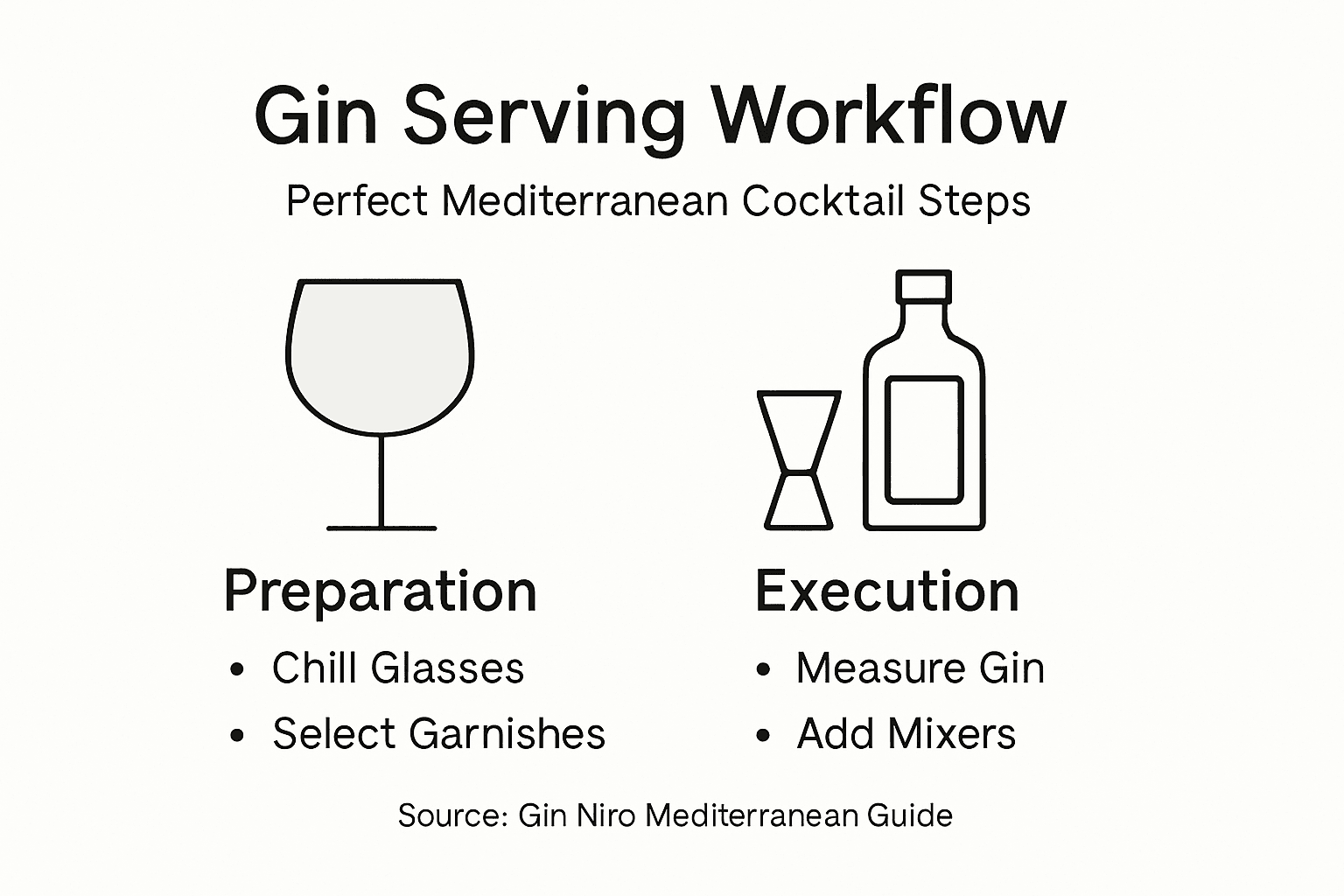
Selecting complementary mixers requires understanding how different components interact with your artisan gin's unique botanical profile. The right mixer can transform a good cocktail into an extraordinary sensory journey.
Premium mixer categories to explore:
- Artisanal tonic waters with botanical infusions
- Fresh citrus juices matching gin's flavor notes
- Herb-infused syrups complementing Mediterranean ingredients
- Small-batch sodas with natural ingredients
- Sparkling mineral waters for subtle dilution
When adding mixers, follow these essential guidelines:
- Start with small quantities
- Taste as you blend
- Match mixer intensity to gin's botanical strength
- Consider temperature and ice ratios
- Adjust proportions incrementally
A perfectly balanced mixer doesn't overpower the gin - it amplifies its intrinsic character.
Consider the Mediterranean gin's unique profile when selecting mixers. Gins with citrus or herbal notes pair beautifully with light, crisp mixers that enhance rather than mask the spirit's complexity.
Pro tip: Always chill your mixers in advance to prevent temperature shock and preserve the gin's delicate flavor nuances.
Step 5: Garnish and Present for Maximum Sensory Impact
The final stage of crafting a remarkable Mediterranean gin cocktail is all about creating a sensory experience that engages sight, smell, and taste. Your garnishing technique can transform an ordinary drink into an extraordinary journey through Mediterranean flavors.
Mediterranean cocktail garnishing techniques elevate the drinking experience by strategically introducing complementary aromatics and visual elements that enhance the gin's intricate botanical profile.
Classic Mediterranean-inspired garnish strategies:
- Fresh herb sprigs positioned to release aromatics
- Citrus wheels for vibrant visual and flavor accents
- Green olives reflecting regional culinary traditions
- Edible flowers for elegant presentation
- Aromatic salt rims to intensify flavor complexity
Garnishing steps for maximum impact:
- Select garnishes that complement gin's botanical notes
- Position herbs to maximize aroma release
- Cut citrus with precision
- Use minimal garnishes for clean presentation
- Consider temperature and placement
Every garnish tells a story - yours speaks of Mediterranean sunshine and tradition.
The art of presentation goes beyond mere decoration. Each carefully chosen element should interact with the gin, creating a multisensory experience that transports the drinker to the Mediterranean coastline.
Pro tip: Gently press or lightly bruise herbs before garnishing to intensify their aromatic oils and create a more immersive sensory experience.
Step 6: Verify Flavor and Presentation Consistency
The ultimate test of artisan gin craftsmanship is maintaining an unwavering standard of flavor and visual presentation. Your goal is to create a sensory experience that remains consistently exceptional from the first pour to the last.
Quality control techniques are essential for preserving the integrity of your Mediterranean gin cocktail, ensuring each serving meets the highest sensory standards.
Key verification techniques include:
- Visual clarity assessment
- Aroma profile evaluation
- Flavor balance examination
- Temperature consistency check
- Garnish precision review
Consistent verification steps:
Compare key quality control checks to maximize Mediterranean gin cocktail consistency:
| Check Type | What to Assess | Why It Matters |
|---|---|---|
| Visual Clarity | Transparency, color | Ensures appealing look |
| Aroma Profile | Botanical intensity | Confirms complexity |
| Garnish Placement | Position, freshness | Maintains presentation |
| Temperature | Coldness, ice dilution | Preserves ideal taste |
| Flavor Balance | Sweetness, bitterness | Delivers harmonious sips |
- Inspect drink clarity and color
- Smell the cocktail before tasting
- Evaluate flavor complexity
- Check garnish placement
- Confirm overall sensory harmony
Consistency transforms a good cocktail into a memorable experience.
Professional bartenders understand that every detail matters. From the moment the gin touches the glass to the final sip, maintaining a uniform sensory profile is an art form that separates exceptional service from ordinary.
Pro tip: Use a white napkin or background when checking drink clarity to quickly identify any unexpected color variations or cloudiness.
Elevate Your Mediterranean Gin Experience with Gin Niro
Unlock the full potential of your artisan gin workflow by choosing Gin Niro, a premium Mediterranean-style spirit crafted with traditional distillation and unique Sicilian citrus. This article highlights the challenges of precise measurement, perfect garnishing, and balanced mixers to create an unforgettable cocktail. Gin Niro addresses these goals by delivering a refined botanical profile featuring zibibbo aromatic grapes and vibrant citrus notes designed to shine in every glass.
Experience the harmony of flavor and craftsmanship by exploring the authentic taste of Gin Niro on our Homepage – Gin Niro. Discover detailed product information and expert pairing suggestions that help you serve the perfect Mediterranean gin cocktail every time. Don't wait to transform your serving workflow into a celebration of tradition and quality. Visit https://ginniro.it now and take the first step toward mastering artisan gin excellence.
For further inspiration on cocktail preparation and to deepen your appreciation of gourmet spirits, check out our Homepage – Gin Niro and let Gin Niro become your trusted companion in premium gin service.
Frequently Asked Questions
What type of glassware should I use for serving artisan gin?
To serve artisan gin effectively, use appropriate glassware such as martini glasses for classic cocktails, rocks glasses for neat serves, and highball glasses for gin and tonic beverages. Choose glassware that enhances the gin's sensory profile by highlighting its aromas and flavors.
How can I choose the right garnishes for Mediterranean gin cocktails?
Selecting the right garnishes involves understanding the gin's botanical profile. Use fresh herbs like rosemary or citrus peels, and match them with the gin’s predominant notes to elevate the cocktail’s Mediterranean character.
What are the best methods for measuring and pouring artisan gin?
To measure and pour artisan gin accurately, use a jigger for precision and keep measuring tools at eye level. Aim for consistency by pouring slowly and leveling the liquid at the measurement line for cocktails, such as using 2.5 oz for a martini.
How can I ensure my gin cocktails are balanced with mixers?
Start by selecting premium mixers that complement your gin's flavor profile, such as artisanal tonic waters or fresh citrus juices. Adjust the mixer quantities incrementally while tasting as you blend to maintain harmony between the gin and mixer.
What steps should I follow for presenting my gin cocktails?
For maximum sensory impact, garnish your gin cocktails with fresh herbs and citrus, and focus on the overall presentation. Position garnishes to enhance aroma release and keep the presentation clean by using minimal but striking decorative elements.
How do I verify the consistency of flavor and presentation in my gin cocktails?
To verify consistency, conduct visual clarity assessments, aroma profile evaluations, and flavor balance examinations. Regular checks ensure each cocktail maintains its intended sensory experience, aiming for uniformity in taste and appearance from the first to the last pour.