
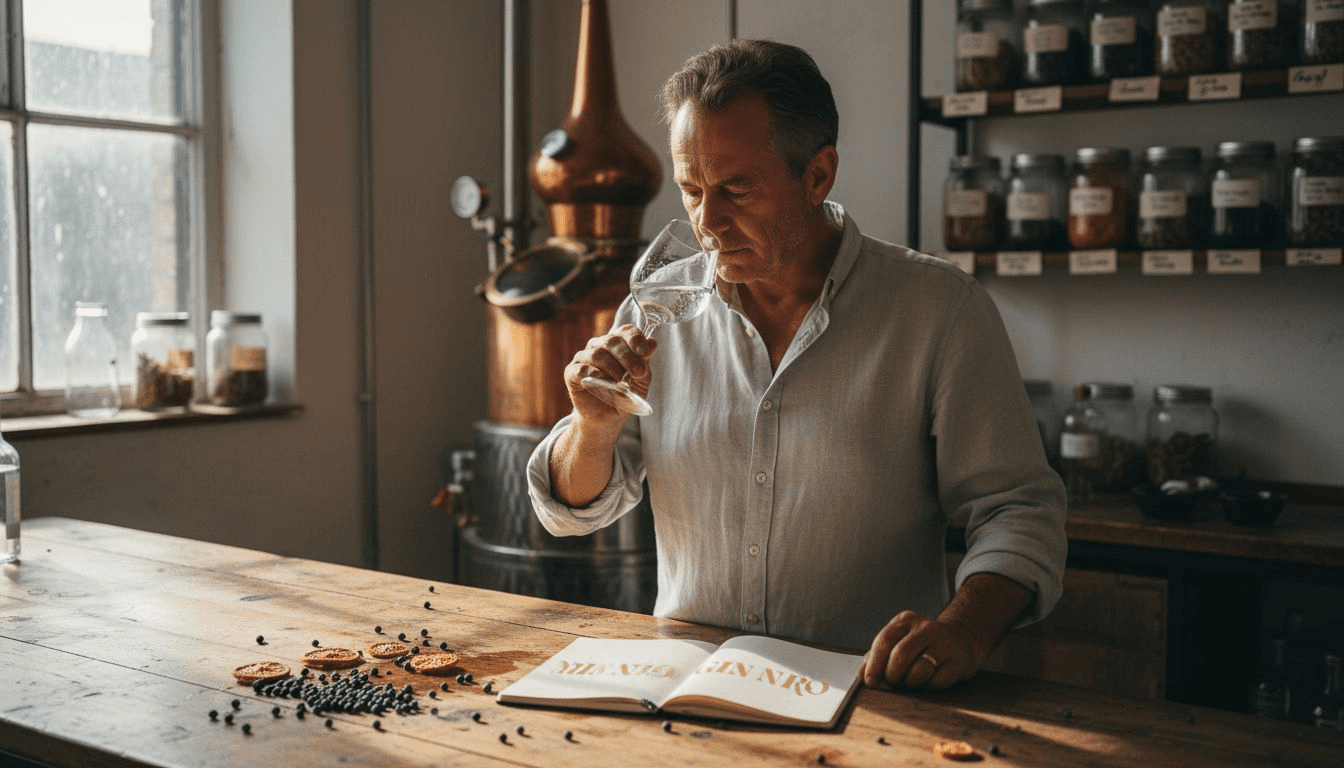
Think Mediterranean gins are simply sweeter, less juniper-forward spirits? Wrong. By law, juniper must dominate every gin's aroma profile. Yet Mediterranean variants achieve distinct herbaceous, citrus-layered complexity while respecting this rule. This article unpacks the botanical, chemical, and distillation factors shaping Mediterranean gin aroma, equipping you with refined sensory techniques to deepen your tasting expertise and appreciation.
Table of Contents
- Foundations Of Gin Aroma: Juniper And Botanical Base
- Distinctive Mediterranean Botanical Aromas
- Chemical Composition And Quantified Aroma Profiles
- Distillation Techniques And Aroma Extraction
- Common Misconceptions About Gin Aroma
- Mediterranean Gin Aroma Compared To Other Styles
- Practical Sensory Training For Aroma Identification
- Crafting Mediterranean Gin Aroma: Artisanal Techniques
- Explore Mediterranean Gin Mastery With GIN NIRO
- Frequently Asked Questions
Key Takeaways
| Point | Details |
|---|---|
| Juniper Dominance | Juniper berries legally must provide over 51% of gin's aromatic intensity, even in Mediterranean styles. |
| Mediterranean Botanicals | Herbs like rosemary, thyme, and Sicilian citrus create unique fresh, resinous layers atop juniper. |
| Distillation Impact | Maceration produces deeper aromas; vapor infusion yields lighter, delicate notes. |
| Chemical Composition | Mono- and sesquiterpenes account for 69% of aroma compounds in quality Mediterranean gins. |
| Sensory Training | Botanical aroma kits improve identification accuracy by 30-40% within four weeks. |
Foundations of Gin Aroma: Juniper and Botanical Base
Every gin starts with juniper. EU regulations mandate that juniper berries provide the dominant aromatic character, typically contributing over 60% of aromatic intensity. This isn't negotiable.
Juniper delivers a piney, resinous aroma profile with subtle floral and citrus hints. In Mediterranean gins, juniper remains the backbone, but regional botanicals add complexity without overshadowing it. The result? A balanced aromatic architecture where juniper anchors the profile while Mediterranean herbs and citrus create nuanced layers.
Common misconceptions arise here. Many assume Mediterranean gins minimize juniper to showcase local botanicals. False. The law requires juniper dominance. What changes is how complementary botanicals interact with juniper's core profile, creating perceived complexity rather than reducing juniper's presence.
Key juniper contributions:
- Piney, resinous base notes forming the aromatic foundation
- Subtle floral undertones adding delicate complexity
- Citrus-like brightness enhancing freshness
- Earthy depth providing structure for other botanicals
Pro Tip: When nosing Mediterranean gin, identify juniper first. Once you anchor on that piney core, you can discern the layered herbs and citrus more accurately.
Juniper's chemical compounds, primarily monoterpenes like alpha-pinene and beta-pinene, create the signature resinous character. These compounds remain dominant even when 8-15 additional botanicals join the distillation. Understanding this foundation helps you appreciate how Mediterranean distillers achieve aromatic diversity within legal constraints.
Distinctive Mediterranean Botanical Aromas
Mediterranean gins distinguish themselves through regional botanicals that layer fresh, herbaceous notes onto juniper's foundation. Herbs like rosemary, thyme, basil, and sage contribute unique aromatic profiles that are resinous, slightly savory, and intensely fresh.
Citrus botanicals amplify this distinctiveness. Sicilian lemon, orange, and bergamot contribute bright, zesty notes that lift the entire aromatic profile. These aren't simple fresh scents. Bergamot adds floral complexity, blood orange brings subtle bitterness, and lemon zest contributes sharp brightness.
Typical botanical composition in Mediterranean gins:
- Juniper: 55-65% of aromatic intensity
- Mediterranean herbs: 15-25%
- Citrus botanicals: 20-30%
These percentages explain how distillers maintain legal juniper dominance while crafting Mediterranean flavor profiles that feel herb-forward and citrus-bright. The herbs don't overpower; they complement. Rosemary's camphor notes enhance juniper's resinous quality. Thyme's earthiness deepens the base. Basil adds unexpected green freshness.
Mediterranean botanical aromatic characteristics:
- Rosemary: Camphor, pine-like resinous notes
- Thyme: Earthy, slightly medicinal warmth
- Basil: Green, fresh, subtly sweet
- Sage: Herbaceous, slightly peppery complexity
- Sicilian lemon: Sharp, clean citrus brightness
- Bergamot: Floral citrus with tea-like nuances
The magic happens in layering. When you nose a quality Mediterranean gin, you first detect juniper's piney core. Then herbaceous notes emerge, followed by citrus brightness. This sequential revelation creates aromatic depth that distinguishes Mediterranean styles from more straightforward London Dry profiles.
Chemical Composition and Quantified Aroma Profiles
Science reveals what your nose detects. Research has identified 67 distinct odorants in gin, with mono- and sesquiterpenes comprising 69% of these compounds. These terpenes create the aromatic backbone of quality Mediterranean gins.
Three monoterpenes dominate: beta-pinene, gamma-terpinene, and limonene. Their ratios determine aromatic character and perceived quality. Beta-pinene contributes woody, pine notes. Gamma-terpinene adds fresh, citrus-like brightness. Limonene brings classic citrus aroma.
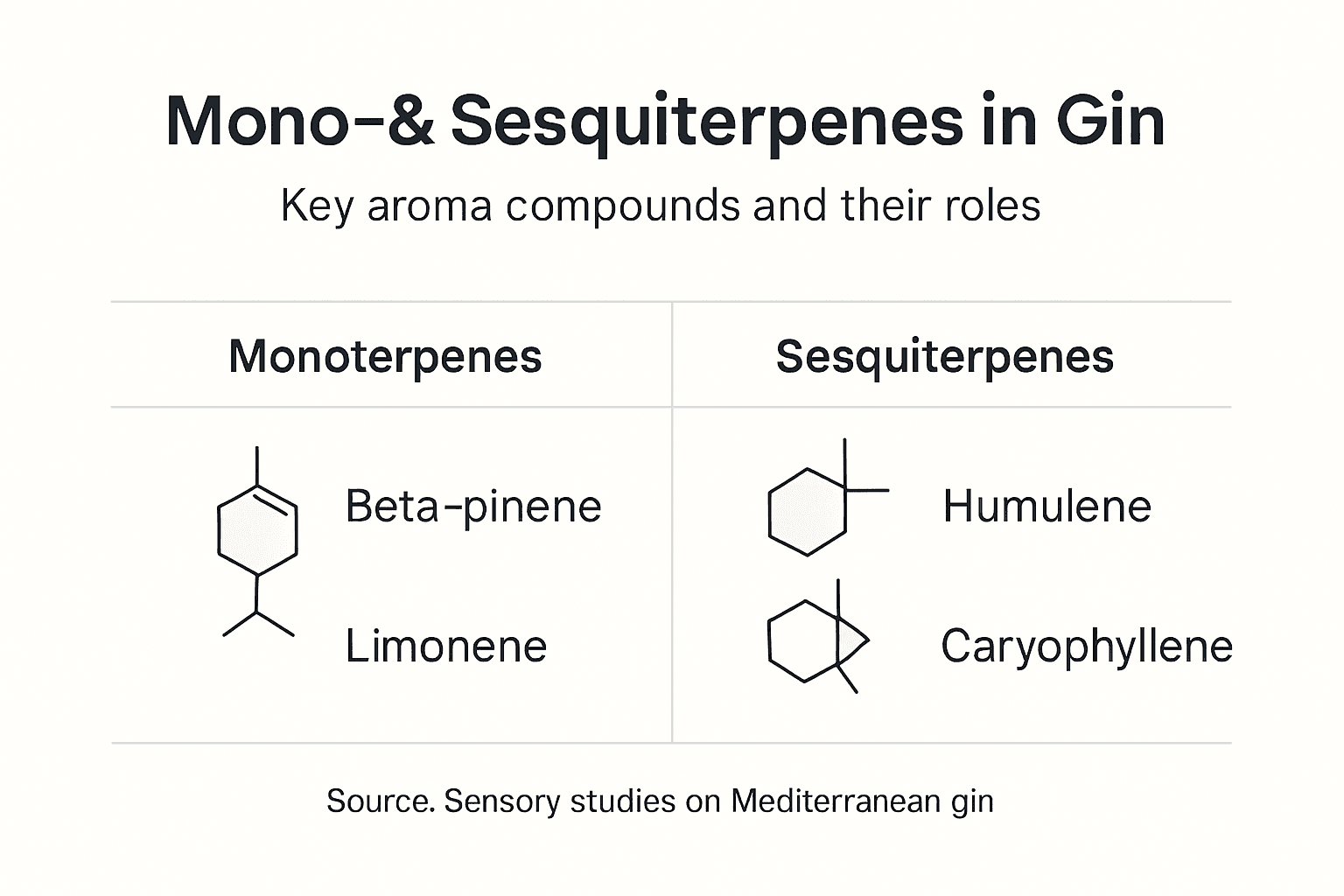
Typical monoterpene composition in gold-ranked Mediterranean gins:
| Compound | Percentage | Aromatic Contribution |
|---|---|---|
| Beta-pinene | 22-28% | Woody, pine, resinous |
| Gamma-terpinene | 18-24% | Fresh, citrus-like brightness |
| Limonene | 15-20% | Classic citrus, orange peel |
| Alpha-pinene | 12-16% | Sharp pine, turpentine-like |
| Linalool | 8-12% | Floral, slightly spicy |
These percentages matter for connoisseurs. Higher beta-pinene ratios create more pronounced piney, resinous profiles. Elevated limonene percentages shift the profile toward citrus brightness. Quality Mediterranean gins balance these compounds to achieve complexity without letting any single note dominate beyond juniper's required presence.
Pro Tip: When comparing gins, note which aromatic qualities feel most prominent. That reveals the underlying monoterpene ratios, helping you understand distillers' botanical choices and extraction methods.
Sesquiterpenes add deeper, earthier notes. Though less volatile than monoterpenes, they provide aromatic stability and subtle complexity. Compounds like caryophyllene contribute spicy, woody undertones that round out the aromatic profile, especially in gins using longer maceration techniques.
Understanding these chemical foundations helps you articulate what you smell. Instead of vague "herbaceous" descriptors, you can identify specific piney, citrus, or floral notes tied to actual chemical compounds. This precision elevates your tasting vocabulary and appreciation.
Distillation Techniques and Aroma Extraction
How distillers extract botanical aromas dramatically shapes the final profile. Two primary methods dominate: maceration and vapor infusion. Maceration produces deeper, richer aromas while vapor infusion yields lighter, more delicate notes.
Maceration involves steeping botanicals directly in neutral grain spirit before distillation. Contact time ranges from hours to days. This method extracts oils, terpenes, and aromatic compounds thoroughly, creating robust, complex profiles. Mediterranean gins often use maceration for juniper and heartier herbs like rosemary and thyme.
Vapor infusion suspends botanicals in a basket above the boiling spirit. Vapor passes through, extracting lighter, more volatile compounds. This gentler method preserves delicate citrus and floral notes that might become muddled in maceration. Many Mediterranean distillers combine both techniques, macerating robust botanicals while vapor-infusing delicate ones.
Distillation method comparison:
| Method | Contact Time | Aromatic Result | Best For |
|---|---|---|---|
| Maceration | 12-48 hours | Deep, rich, full-bodied aromas | Juniper, hearty herbs, roots |
| Vapor Infusion | 2-6 hours | Light, delicate, bright aromas | Citrus peels, flowers, soft herbs |
| Hybrid | Varies | Balanced complexity | Premium Mediterranean gins |
Impact on aromatic profile:
- Maceration extracts heavier terpenes and oils, creating bold juniper and herb presence
- Vapor infusion captures volatile top notes, preserving citrus brightness
- Hybrid approaches layer depth with delicacy, achieving aromatic complexity
Artisanal Mediterranean producers often macerate individual botanicals separately, then blend the distillates. This precision allows exact control over each botanical's aromatic contribution. A distiller might macerate juniper for 36 hours but vapor-infuse bergamot for just 4 hours, optimizing each botanical's expression.
The distillation cut matters too. Early cuts (heads) contain volatile, sharp compounds. Middle cuts (hearts) provide balanced aromatic quality. Late cuts (tails) add heavier, oilier notes. Master distillers select narrow heart cuts to maximize aromatic purity and complexity in premium Mediterranean gins.
Common Misconceptions About Gin Aroma
Several myths cloud understanding of Mediterranean gin aromas. Let's clarify them.
Myth 1: Mediterranean gins are less juniper-forward.
Fact: Juniper legally must remain the dominant aromatic component, contributing over 51% of flavor presence. Mediterranean gins balance juniper with regional botanicals, but juniper never recedes. The perception of reduced juniper comes from skilled layering of complementary herbs and citrus, not actual juniper reduction.
Myth 2: All aroma differences stem from post-distillation flavoring.
Fact: Most aromatic compounds extract during distillation or maceration. EU gin regulations prohibit artificial flavoring in traditional gin categories. What you smell comes from botanical selection, extraction methods, and distillation precision, not added essences or flavorings. Premium Mediterranean gins achieve complexity through craft, not additives.
Myth 3: Citrus aromas are simple, one-dimensional fresh notes.
Fact: Citrus aromas in quality gins exhibit layered complexity. Bergamot contributes floral tea-like nuances. Blood orange adds subtle bitter undertones. Lemon zest brings sharp brightness plus subtle sweetness. Different citrus varieties, peel processing methods, and extraction techniques create multidimensional aromatic profiles far beyond simple "citrus freshness."
Key clarifications:
- Mediterranean gins maintain full juniper presence while adding botanical layers
- Aromatic complexity comes from distillation craft, not artificial additives
- Citrus profiles in premium gins show remarkable depth and variation
- Perceived sweetness often reflects aromatic balance, not added sugar
Understanding these facts helps you evaluate Mediterranean gins accurately. When you detect herb-forward aromas, you're experiencing skilled botanical balancing atop mandatory juniper dominance, not juniper reduction. This knowledge sharpens your sensory discrimination and appreciation.
Mediterranean Gin Aroma Compared to Other Styles
Mediterranean gins occupy a distinct aromatic space. Comparing them to London Dry styles clarifies their unique characteristics.
London Dry gins typically use 5-8 classic botanicals: juniper, coriander seed, angelica root, orris root, citrus peel. The profile emphasizes juniper's piney character with subtle spice and citrus support. No post-distillation additions are permitted, ensuring clean, focused aromatic profiles.
Mediterranean gins employ 8-15 botanicals, including regional herbs and diverse citrus varieties. This broader palette creates layered aromatic complexity. While juniper remains dominant, the profile feels more herbaceous and citrus-bright than London Dry equivalents.
Style comparison:
| Aspect | Mediterranean Gin | London Dry Gin |
|---|---|---|
| Botanical Count | 8-15 botanicals | 5-8 botanicals |
| Herb Emphasis | Strong (rosemary, thyme, basil) | Minimal (coriander) |
| Citrus Profile | Diverse (bergamot, blood orange, lemon) | Classic (lemon, orange) |
| Aromatic Character | Layered, herbaceous, bright | Focused, piney, clean |
| Juniper Presence | 55-65% intensity | 65-75% intensity |
These differences matter for connoisseurs. If you prefer clean, juniper-forward profiles, London Dry styles deliver. If you seek aromatic complexity with herbaceous and citrus layers, Mediterranean gins excel. Neither is superior; they serve different taste preferences and cocktail applications.
Mediterranean gins also differ from New Western or Contemporary styles, which sometimes minimize juniper to showcase unusual botanicals like cucumber or rose. Mediterranean gins respect juniper's traditional dominance while exploring regional botanical diversity within that framework.
Recognizing these distinctions helps you select gins matching your aromatic preferences and understand why certain gins pair better with specific mixers or cocktail styles.
Practical Sensory Training for Aroma Identification
Developing your aromatic discrimination takes practice. Here's how to train your nose systematically.
1. Build a botanical reference library.
Acquire individual botanicals: juniper berries, fresh rosemary, thyme, lemon peel, bergamot. Smell them individually, noting specific aromatic qualities. This creates mental reference points for gin tasting.
2. Use structured tasting protocols.
Pour gin into a tulip-shaped glass. Swirl gently to release aromatics. Nose the glass from different distances: far (light volatiles), medium (balanced profile), close (intense base notes). Note which aromas emerge at each distance.
3. Practice blind identification.
Botanical aroma kits improve identification accuracy by 30-40% within four weeks. Have someone prepare unlabeled samples of different Mediterranean gins. Identify botanicals present, then compare to actual botanical lists.
4. Develop aromatic vocabulary.
Move beyond generic terms like "herbal" or "citrusy." Specify: Is the citrus sharp lemon or floral bergamot? Is the herb camphor-like rosemary or earthy thyme? Precise language reflects precise sensory discrimination.
5. Track your progress.
Maintain a tasting journal. Record gins tasted, aromas detected, and identification accuracy. Review periodically to note improvement and identify aromatic gaps in your training.
6. Compare styles systematically.
Taste Mediterranean and London Dry gins side by side. Note aromatic differences directly. This comparative approach accelerates learning and sharpens discrimination skills.
Pro Tip: Smell botanicals before tasting gin containing them. This primes your olfactory system, making botanical identification in complex blends significantly easier.
Training benefits:
- Enhanced ability to identify individual botanicals in complex blends
- Improved understanding of distillation quality indicators
- Greater appreciation for subtle aromatic nuances
- More articulate communication about gin preferences
Consistent practice transforms casual enjoyment into expert appreciation. Four weeks of structured training dramatically improves aromatic discrimination, deepening your Mediterranean gin experiences.
Crafting Mediterranean Gin Aroma: Artisanal Techniques
Artisanal Mediterranean distillers employ traditional techniques that shape distinctive aromatic profiles. Understanding these methods reveals the craft behind exceptional gins.
Mediterranean producers often macerate individual botanicals for up to 36 hours, extracting maximum aromatic complexity. Some incorporate regional fruits like zibibbo grapes, with certain citrus fermented for a year before distillation. These extended processes develop aromatic depth impossible with faster methods.
Separate botanical distillation allows precise control. A distiller might create individual distillates for juniper, rosemary, thyme, and citrus, then blend them in exact ratios. This precision ensures consistent aromatic profiles batch to batch while maximizing each botanical's expression.
Artisanal techniques impacting aroma:
- Extended maceration (24-48 hours) for depth and complexity
- Individual botanical distillation for precise aromatic control
- Regional fruit incorporation (zibibbo grapes) for unique character
- Fermented citrus (6-12 months) for developed aromatic profiles
- Copper pot still distillation for traditional flavor development
- Narrow heart cuts for aromatic purity
Copper pot stills contribute significantly. Copper reacts with sulfur compounds, removing off-notes and creating smoother aromatic profiles. The slow distillation in traditional pot stills allows delicate temperature control, preserving volatile aromatic compounds that flash distillation might lose.
Some Mediterranean distillers use hybrid stills combining pot and column elements. This provides flexibility: pot still character for base botanicals, column precision for delicate citrus and floral notes.
Batch size matters too. Small-batch production (50-200 liters) allows meticulous attention to each distillation run. Larger commercial operations struggle to achieve the same aromatic consistency and complexity.
These artisanal approaches explain why premium Mediterranean gins command higher prices. The time, precision, and traditional craft invested in aromatic development far exceeds industrial gin production. When you nose exceptional Mediterranean gin, you're experiencing hours of maceration, careful distillation cuts, and masterful botanical blending.
Explore Mediterranean Gin Mastery with GIN NIRO
Ready to apply your deepened understanding? GIN NIRO offers curated resources and premium selections that transform knowledge into sensory experience.
Explore our guide to Sicilian gin culture to understand regional traditions shaping Mediterranean aromatic profiles. Discover what defines premium gin quality and how artisanal distillation techniques create exceptional complexity. Our detailed exploration of Mediterranean gin distillation processes reveals the craft behind the aromas you now recognize. Visit GIN NIRO to access expert insights, deepen your appreciation, and experience Mediterranean gin at its finest.
Frequently Asked Questions
How does juniper influence Mediterranean gin aroma?
Juniper provides the mandatory dominant aromatic foundation, contributing 55-65% of aromatic intensity with piney, resinous, and subtly citrus notes. Mediterranean gins layer regional herbs and citrus atop this juniper base, creating complexity while maintaining legal juniper dominance.
What makes Mediterranean gin aroma distinct from other styles?
Mediterranean gins incorporate 8-15 botanicals including regional herbs like rosemary, thyme, and basil plus diverse citrus varieties such as bergamot and Sicilian lemon. This creates layered, herbaceous, citrus-bright profiles while maintaining juniper's required presence, distinguishing them from simpler London Dry profiles.
Can beginners train their sense of smell for gin?
Absolutely. Using botanical aroma kits and practicing structured tasting improves identification accuracy by 30-40% within four weeks. Start by smelling individual botanicals, then progress to identifying them in complex blends through consistent practice.
Why do distillation methods matter for aroma?
Maceration extracts deeper, richer aromas through extended botanical contact with spirit, while vapor infusion captures lighter, more delicate notes. Premium Mediterranean gins often combine both methods, macerating robust botanicals and vapor-infusing delicate ones to achieve balanced aromatic complexity.
Are citrus aromas in Mediterranean gin more complex than they seem?
Yes. Quality Mediterranean gins use diverse citrus varieties contributing layered aromatic profiles. Bergamot adds floral tea-like nuances, blood orange brings subtle bitterness, and lemon zest contributes sharp brightness plus underlying sweetness. Different peel processing and extraction methods create multidimensional citrus complexity far beyond simple freshness.