
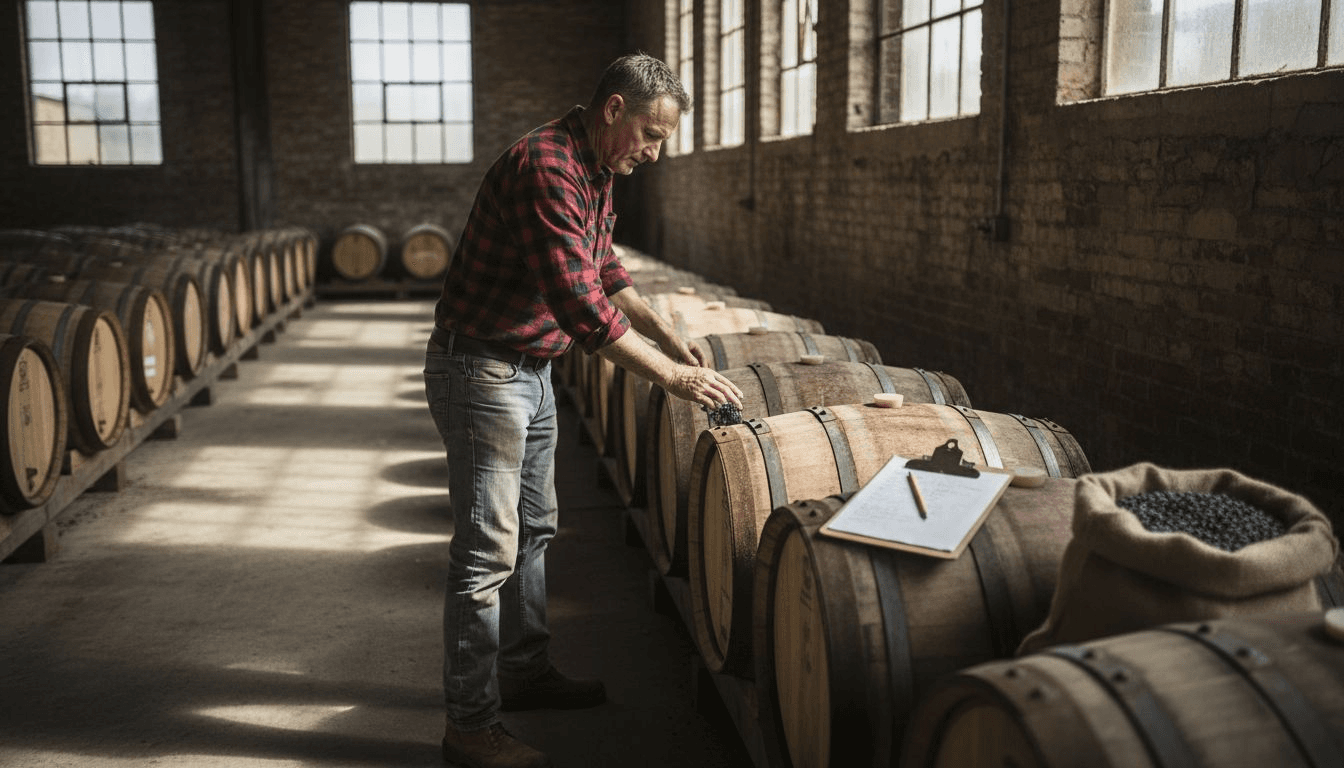
Selecting a Mediterranean gin for your next tasting often sparks curiosity about how aging transforms its character. As luxury spirit enthusiasts explore beyond tradition, the process of aging gin in carefully chosen barrels reveals a world of nuanced flavors and aromas. Understanding how barrel aging creates a softer, sweeter, and more complex gin profile without overpowering botanicals will guide connoisseurs toward a more discerning appreciation of this innovative approach.
Table of Contents
- Defining Gin Aging And Common Misconceptions
- Types Of Gin Aging And Barrel Variations
- How The Gin Aging Process Works
- Flavor Changes And Sensory Impact
- Risks, Costs, And What To Look For
Key Takeaways
| Point | Details |
|---|---|
| Gin Aging Is Unique | Unlike whiskey, gin aging focuses on enhancing the botanical profile rather than overpowering it. |
| Barrel Selection Matters | Different wood types contribute distinct characteristics; understanding this can elevate your tasting experience. |
| Controlled Aging Is Crucial | Mastery of aging variables ensures quality and balance in flavor, vital for producing high-caliber gin. |
| Consumer Knowledge Is Key | Seek detailed information on barrel types and aging processes to identify authentically crafted aged gins. |
Defining Gin Aging and Common Misconceptions
Gin aging represents a nuanced craft process that challenges traditional perceptions of gin production. While most spirits like whiskey rely heavily on barrel aging, gin has historically been viewed differently. Gin aging practices reveal a complex technique that transforms the spirit's fundamental character without overwhelming its delicate botanical profile.
Traditionally, gin was consumed unaged, highlighting its crisp botanical essence. Modern distillers, however, are experimenting with controlled aging techniques that introduce subtle wood-derived complexities. These methods typically involve brief barrel resting periods ranging from several weeks to a few months, designed to enhance rather than mask the gin's original flavor composition. The goal is not to create an aged whiskey-like product, but to develop a more sophisticated and layered gin experience.
One prevalent misconception is that aging automatically diminishes gin's fundamental character. In reality, skilled producers carefully select barrel types and manage aging duration to complement the gin's existing botanical recipe. Some distillers use previously used wine or bourbon barrels, which impart subtle undertones without dominating the gin's intrinsic flavor profile. This delicate balance requires significant expertise and understanding of both the base spirit and the aging environment.
Pro Tip: When exploring aged gins, start by comparing small batch productions to understand the nuanced impact of different wood treatments and aging techniques.
Types of Gin Aging and Barrel Variations
The art of gin aging involves a sophisticated exploration of wood types and barrel selections that dramatically influence the spirit's final character. Barrel variations offer distillers an extraordinary palette of flavor possibilities, transforming traditional gin production through carefully selected wooden vessels. Each barrel type introduces unique sensory dimensions, creating a complex landscape of taste and aroma.
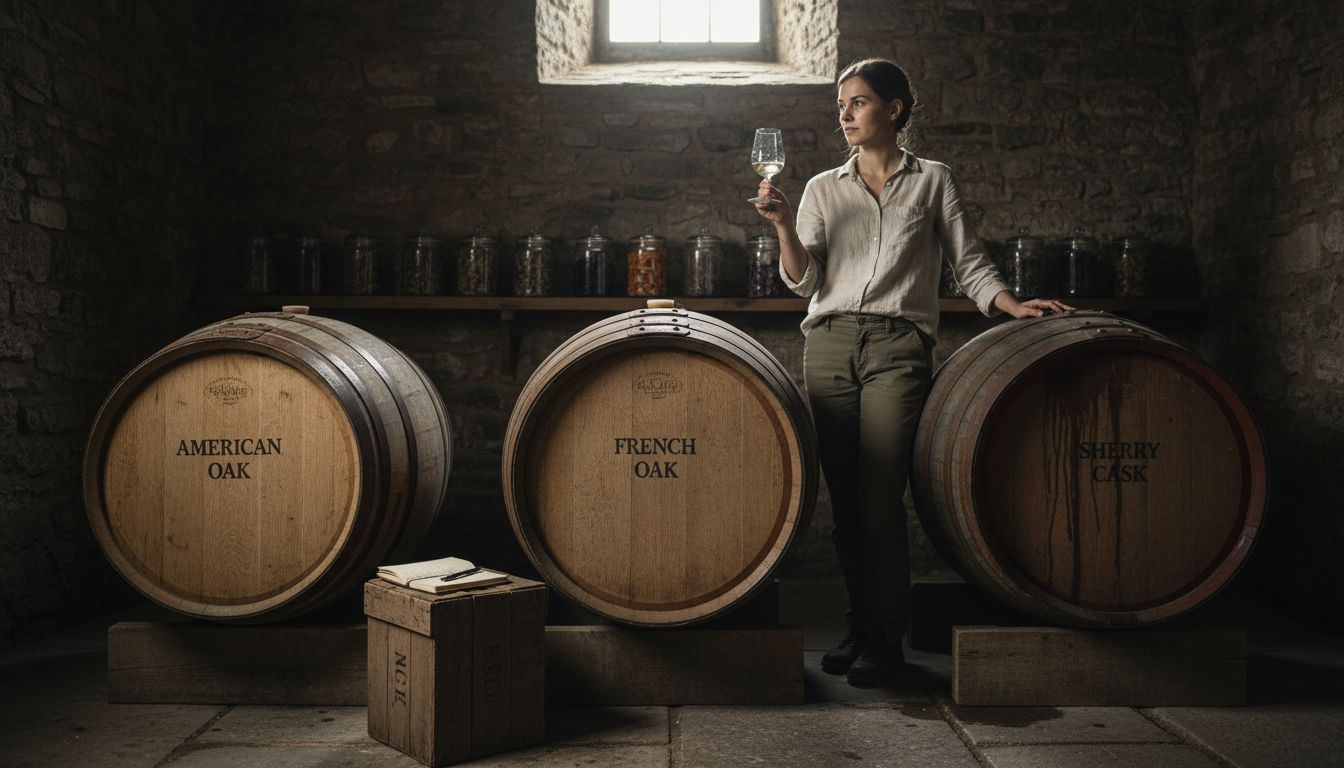
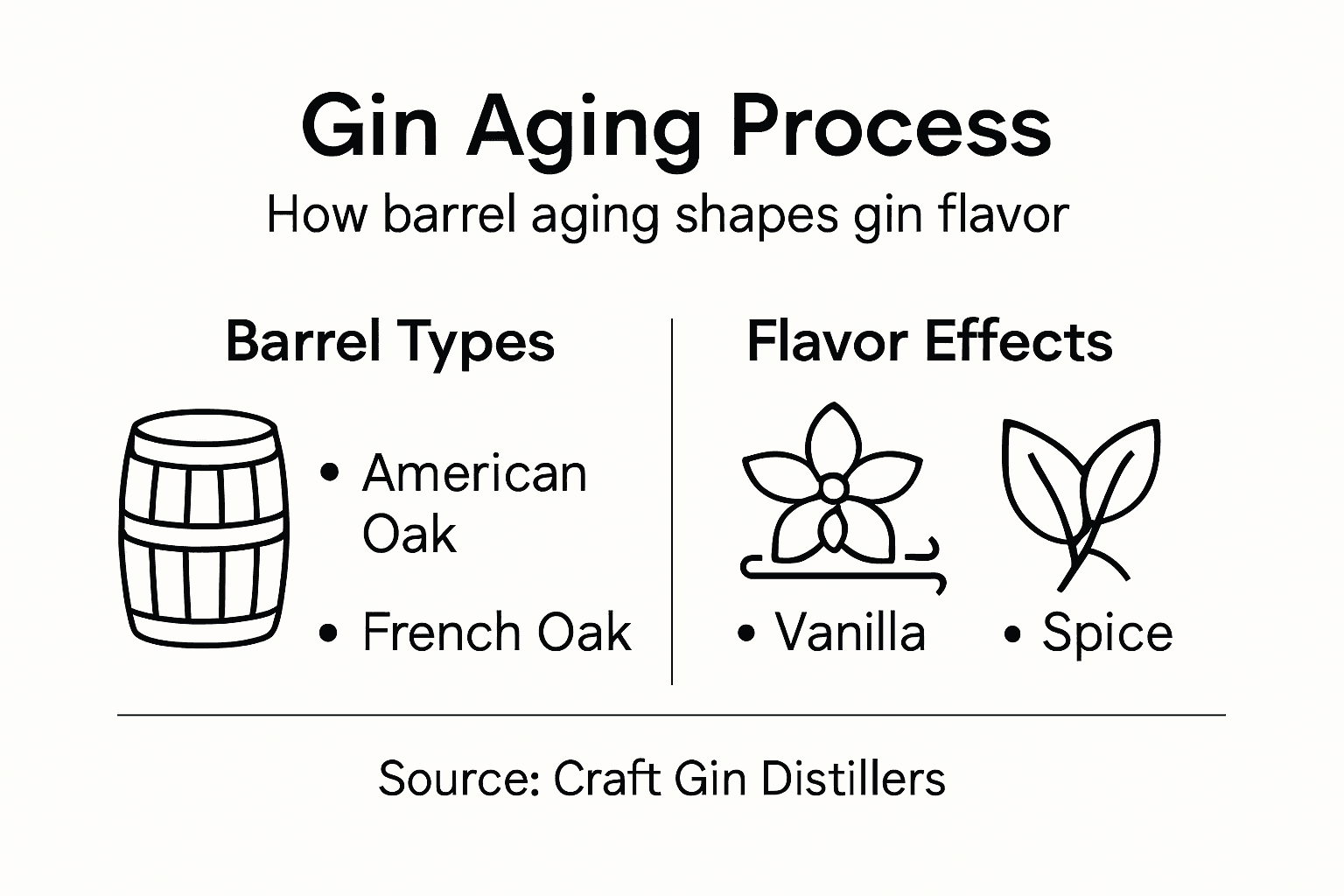
Traditional gin aging predominantly utilizes three primary wood categories: American oak, French oak, and specialty woods like cherry or chestnut. American oak barrels typically contribute rich vanilla and caramel undertones, while French oak introduces more pronounced spicy and tannic characteristics. Specialty woods can add unexpected fruity or nutty nuances that challenge conventional gin flavor profiles. Many distillers strategically select barrels that have previously contained bourbon, sherry, or wine, leveraging residual spirit essences to further enhance the gin's complexity.
Here's a comparison of the most common barrel types used in gin aging and their impact:
| Barrel Type | Key Flavor Influences | Typical Uses in Gin Aging |
|---|---|---|
| American Oak | Vanilla, caramel, smooth | Adds sweetness and softens botanicals |
| French Oak | Spice, tannin, structure | Intensifies complexity and depth of gin flavors |
| Cherry/Chestnut | Fruity, nutty, unique | Introduces unconventional, experimental character |
The duration and environment of barrel aging play crucial roles in developing the gin's final character. Short aging periods of three to six months allow subtle wood interactions without overwhelming the botanical foundation, whereas longer maturation can produce more pronounced wood-driven flavors. Professional distillers meticulously monitor temperature, humidity, and barrel condition to ensure consistent quality and prevent undesirable flavor developments. 7 types of gin demonstrate how varied aging techniques can dramatically transform a gin's sensory experience.
Pro Tip: When tasting aged gins, pay attention to the subtle interplay between the original botanical recipe and the wood-derived characteristics to appreciate the nuanced craftsmanship.
How the Gin Aging Process Works
Gin aging represents a delicate scientific and artistic process that transforms the spirit through carefully controlled interactions between liquid and wood. Gin aging techniques involve placing distilled gin into carefully selected barrels, most commonly oak, which have previously held other spirits. This nuanced approach allows distillers to introduce complex flavor profiles while maintaining the gin's fundamental botanical character.
The chemical transformation occurs through multiple interconnected mechanisms. As the gin rests in barrels, it undergoes oxidation and absorption of wood compounds, extracting subtle vanilla, caramel, and tannic notes from the barrel's interior. Professional distillers meticulously control three critical variables during aging: barrel type, previous barrel contents, and precise duration. Short aging periods—typically ranging from several weeks to a few months—ensure that wood interactions enhance rather than overwhelm the gin's original flavor composition. How gin is made provides additional context for understanding these intricate production techniques.
Unlike whiskey, which often requires years of maturation, gin aging focuses on subtle flavor refinement. The goal is not to mask the gin's botanical profile but to create a more sophisticated sensory experience. Distillers carefully monitor temperature, humidity, and barrel condition to prevent undesirable chemical reactions. Some producers experiment with unique barrel treatments, such as light toasting or using barrels from specific wine regions, to introduce distinctive flavor nuances that complement the gin's original recipe.
Review the main variables distillers control during gin aging:
| Aging Variable | Why It Matters | Typical Effect on Gin Flavor |
|---|---|---|
| Barrel Selection | Dictates wood and past spirit | Shapes aromatic and flavor complexity |
| Duration | Balances wood vs. botanicals | Short ages enhance, long may dominate |
| Environment | Influences aging consistency | Controls surprises and prevents flaws |
Pro Tip: When exploring aged gins, taste them side by side with their unaged counterparts to appreciate the subtle transformative effects of barrel aging.
Flavor Changes and Sensory Impact
Aged gin undergoes a remarkable sensory transformation that challenges traditional expectations of the spirit. Flavor extraction processes reveal a complex interaction between wooden barrels and gin's botanical composition, generating sophisticated flavor profiles that transcend typical gin characteristics. The aging process introduces nuanced layers of complexity, softening sharp edges while amplifying subtle aromatic dimensions.
Sensory analysis demonstrates profound changes in flavor perception during gin aging. Temporal sensory methods indicate that barrel aging systematically modifies dominant flavor notes, with pronounced shifts in juniper, citrus, and herbal characteristics. Oak barrels contribute distinctive vanilla, caramel, and toasted wood notes that gently integrate with the gin's original botanical recipe. These interactions create a more rounded, sophisticated flavor experience, transforming the spirit's fundamental sensory landscape.
The chemical interactions during aging are intricate and multifaceted. Oxidation and wood compound extraction generate new flavor molecules, effectively smoothing harsh botanical edges while introducing unexpected aromatic complexity. Professional distillers carefully control variables like barrel selection, previous barrel contents, and aging duration to orchestrate precise sensory outcomes. Some producers experiment with alternative wood types—like chestnut or cherry—to introduce unique flavor nuances that challenge conventional gin taste profiles.
Pro Tip: Conduct a side-by-side tasting of aged and unaged gin to develop a sophisticated palate for detecting subtle flavor transformations.
Risks, Costs, and What to Look For
The barrel-aged gin market presents a complex landscape of financial and quality challenges for both producers and consumers. Barrel-aged gin economics reveal significant investments required to create premium aged spirits, with substantial costs associated with barrel procurement, storage, and potential product loss through evaporation. Distilleries must carefully balance their aging strategies to maintain profitability while delivering exceptional flavor experiences.
Quality control represents a critical consideration in gin aging. Professional producers meticulously manage environmental factors to prevent flavor degradation or undesirable chemical interactions. Home aging techniques demonstrate the complexity of this process, highlighting why expert intervention is crucial. Consumers should look for several key indicators when selecting aged gin: consistent color development, balanced wood integration, and preservation of the original botanical profile. Potential red flags include overly aggressive wood notes, inconsistent flavor complexity, or signs of oxidative damage.
Financial risks in gin aging extend beyond production costs. Each barrel represents a significant capital investment, with aging periods potentially tying up resources for months. Distilleries must carefully calculate the potential return on investment, considering market demand for premium aged spirits and the additional production complexity. Sophisticated consumers increasingly seek unique, carefully crafted aged gins that demonstrate genuine artisanal expertise rather than simply relying on marketing claims.
Pro Tip: When purchasing aged gin, examine the bottle for detailed information about barrel type, aging duration, and the distillery's specific aging methodology to ensure authentic craftsmanship.
Discover the Art of Gin Aging with Gin Niro
Understanding the subtle craft of gin aging unlocks a new appreciation for complexity and flavor. If the challenge is finding a gin that balances botanical freshness with sophisticated depth without overpowering wood notes Gin Niro offers a unique Mediterranean approach. Crafted with aromatic zibibbo grapes and Sicilian citrus using traditional distillation methods Gin Niro provides a vibrant yet nuanced sensory experience that honors but does not rely on barrel aging.
Explore our curated collection of premium gins that showcase meticulous craftsmanship and explore how barrel interaction can complement rather than mask true botanical character.
Ready to elevate your gin tasting journey Start with the exceptional flavor of Gin Niro available now on our platform where authenticity meets artisan expertise. Visit the Homepage – Gin Niro and discover detailed product insights and compelling stories behind our signature Mediterranean-style gin. Don’t miss the opportunity to experience a fresh interpretation of gin aging at https://ginniro.it today.
Frequently Asked Questions
What is gin aging and how does it differ from traditional gin production?
Gin aging is the process of resting gin in barrels, typically for several weeks to a few months, to enhance its flavor profile. Unlike traditional gin, which is consumed unaged, aged gin incorporates subtle wood-derived complexities while preserving its botanical essence.
How do different types of barrels impact the flavor of aged gin?
Different barrel types, such as American oak and French oak, introduce unique flavor influences. American oak adds vanilla and caramel notes, while French oak contributes spice and tannin. Specialty woods, like cherry or chestnut, can offer unexpected fruity or nutty characteristics, creating a diverse flavor landscape.
What factors do distillers control during the gin aging process?
Distillers carefully manage variables such as barrel type, previous contents of the barrel, and aging duration. These factors influence the extraction of flavors from the wood and help create a balanced spirit that enhances the gin's botanical profile without overwhelming it.
What should I look for when tasting or purchasing aged gin?
When selecting aged gin, pay attention to consistent color development, balanced wood integration, and preservation of the original botanical character. During tastings, compare aged and unaged gins to appreciate the nuance of flavors and the craftsmanship involved in the aging process.